Where to Donate Books
The short answer: any amount is welcome and there is no upper limit, but if you have three or more boxes a free doorstep pickup is almost always smarter than driving them somewhere. Give My Books Network sends a local Pick-Up Partner to your door at no cost, in cities across the United States.
If you only have a bag or two, or we don't cover your ZIP code yet, keep reading — this page compares every realistic option honestly, including the cases where somebody else is genuinely the better choice.
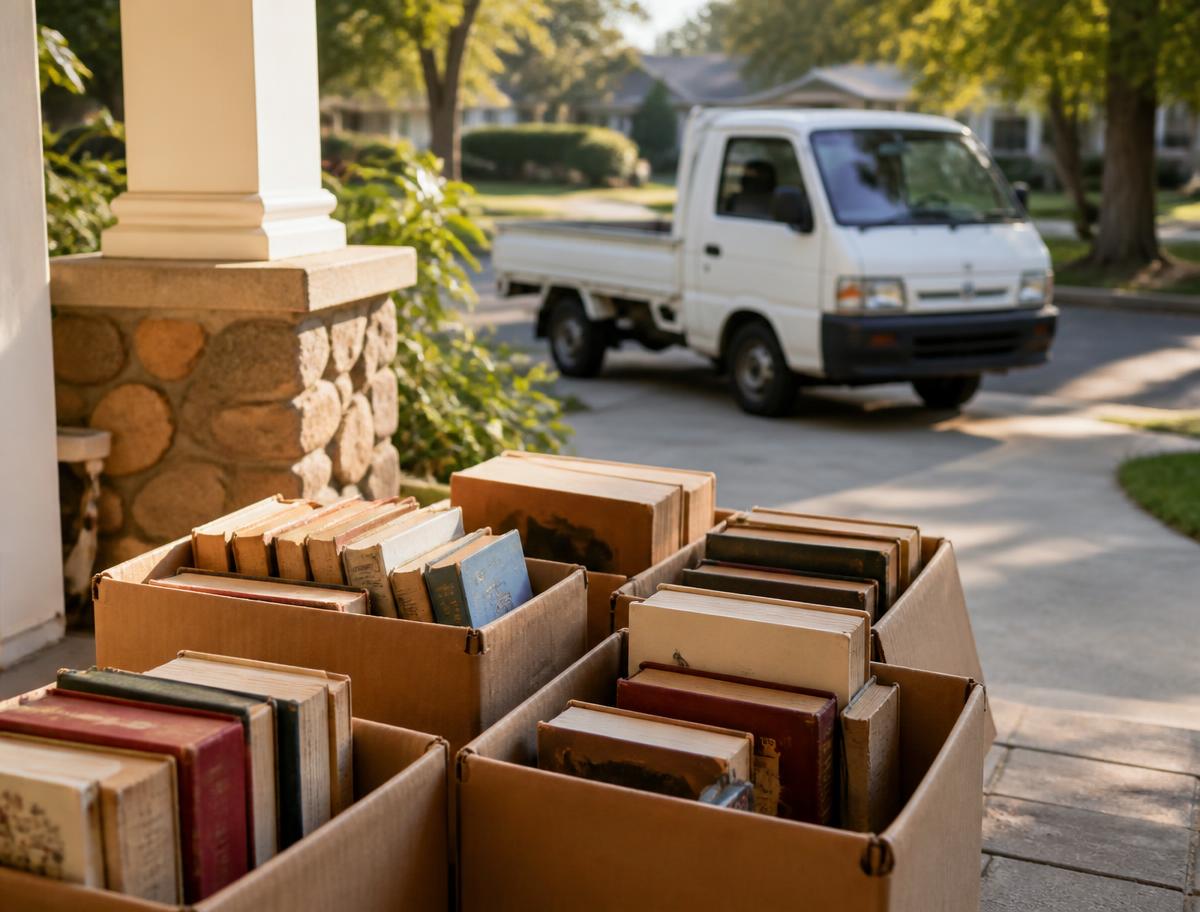
We pick up your books for free
Schedule a free doorstep pickup in about a minute — available nationwide.
No sorting, no lifting, no cost.
Three or more boxes
The clearest case for a free pickup. There is no upper limit — single boxes through whole-house clear-outs.
A bag or two
Drop off at your library's Friends group or a thrift store you already pass — though we'll still come out if you'd rather not drive.
Moldy or water-damaged
Recycle them. No organization can rehome damaged books, and pretending otherwise wastes a volunteer's day.
Every place to donate books, compared
All of these are free to you. What actually separates them is whether somebody collects the books, how many they'll take, and what they turn away at the door. Where another option fits your situation better than ours, the last column says so.
| Option | Comes to your door? | Takes | Won't take | How much | Best for |
|---|---|---|---|---|---|
| Give My Books Network (free doorstep pickup) | Yes, free | Books of every kind, textbooks, cookbooks, CDs, DVDs, audiobooks, vinyl | Moldy or water-damaged books, magazines, newspapers (encyclopedia sets only if your local partner accepts them) | No upper limit — single boxes through whole-house clearouts | More than two or three boxes, or when driving and lifting isn't practical |
| Friends of the Library book saleUnited for Libraries — Friends groups | You drop off | Recent, clean hardcovers and paperbacks in resale condition | Textbooks, encyclopedias, condensed editions, anything musty | Typically a few boxes, and many branches cap it per visit | A small stack of current, popular titles you want staying in your community |
| GoodwillGoodwill donation guidelines | You drop off | Books alongside clothing and household goods, store by store | Damaged books; acceptance varies by local affiliate | Limited by that store's shelf and back-room space | You're already dropping off other household donations |
| Salvation Army Family StoresSalvation Army donation guidelines | You drop off | Gently used books and media | Damaged goods; book pickup is generally not offered even where furniture pickup is | A few boxes | Combining books with a furniture pickup you already scheduled |
| Half Price Books (and used bookstores)Half Price Books — selling to us | You drop off | Almost anything printed; they make an offer on the lot | Nothing outright — but expect pennies, and they keep what they don't want | As much as you can carry in | You'd rather get a few dollars than nothing, and you don't mind the trip |
| Little Free Library boxesLittle Free Library map | You drop off | A handful of appealing, clean books at a time | Anything that won't physically fit, or that a steward hasn't room for | Five to ten books, realistically | A few good books you'd like a neighbor to stumble across |
| Schools and classroom teachers | You drop off | Age-appropriate children's and young-adult books in good shape | Adult fiction, textbooks, anything worn or marked up | Small and specific — ask first | Children's picture books and early readers, when you know the grade level |
| Shelters, food pantries, senior centers | You drop off | Paperback fiction, large print, bilingual titles | Anything heavy, damaged, or requiring storage they don't have | A box or two at a time | Popular paperbacks and large-print books, called ahead |
| Prison book programsPrison Book Program | You drop off | Paperbacks only — dictionaries, GED prep, trade skills, fiction | Hardcovers (most facilities ban them outright), spiral bindings, used workbooks | Varies by program; most want specific requests filled | Paperback non-fiction and reference, if you'll follow their rules exactly |
| Books for troops and veteransOperation Paperback | You drop off | Paperbacks, puzzles, current-interest non-fiction | Hardcovers (shipping weight), religious or political material in some programs | Whatever you'll pay to ship | A modest box of paperbacks, if you're happy covering postage |
| Mail-in and ship-to programs | You drop off | Depends entirely on the program | Bulk quantities — postage makes them uneconomic fast | One or two boxes before shipping costs exceed the books' value | A rare or specialized title a specific program has asked for |
| Paper recycling | You drop off | Paperbacks freely; hardcovers usually need covers removed first | Nothing — this is the end of the line | Unlimited | Moldy, wet, smoke-damaged or insect-damaged books that nobody can rehome |
The question behind "where to donate books"
Almost nobody types this because they're curious. They type it because there's a stack in the hallway, a parent's house that has to be emptied, or a move in three weeks — and the books are the part nobody wants to deal with. So the honest answer depends on one thing: how many books, and can you move them?
If you have a bag or two and you drive past a library anyway, drop them off. You'll be done in five minutes and you don't need us. If you have more than two or three boxes, drop-off stops being realistic fast: most libraries and thrift stores cap what they'll accept per visit, so a fifteen-box clearout becomes five separate trips to four different places, and the last two boxes end up in the garage for another year.
That's the gap free doorstep pickup fills. A local Pick-Up Partner comes to your address on a day you choose, takes everything at once, and it costs you nothing. You don't sort, you don't box by category, you don't lift anything into a car.
What most "where to donate books" articles leave out
The listicles you'll find alongside this page were mostly written years ago and never revised, which matters more than it sounds. Book donation options close down constantly, and an out-of-date list sends you driving to a loading dock that isn't there any more.
The clearest example: Discover Books, for years the biggest name in bulk used-book collection and the one most articles still recommend, shut down in March 2024. Its donation bins were pulled. If a page is still telling you to find a Discover Books bin, nothing else on that page has been checked either.
The other omission is quantity limits. Almost every list presents libraries, Goodwill and thrift stores as interchangeable, when the practical difference is enormous: a Friends of the Library group with one storage closet and two sale weekends a year genuinely cannot take your late mother's forty boxes, and being told to try anyway wastes an afternoon.
- Thrift chains have largely stopped picking books up
- Furniture and large-item pickup still exists in many areas. Books almost never qualify — the resale value per pound doesn't cover the truck.
- Libraries collect for their sale, not their shelves
- Donated books rarely join the catalog. They go to the Friends sale to raise money, which is why condition and current appeal matter so much to them.
- "Donation" and "tax deduction" are not the same thing
- Only a qualifying tax-exempt organization can support a deduction, and you need their receipt. Plenty of legitimate places to send books cannot offer one.
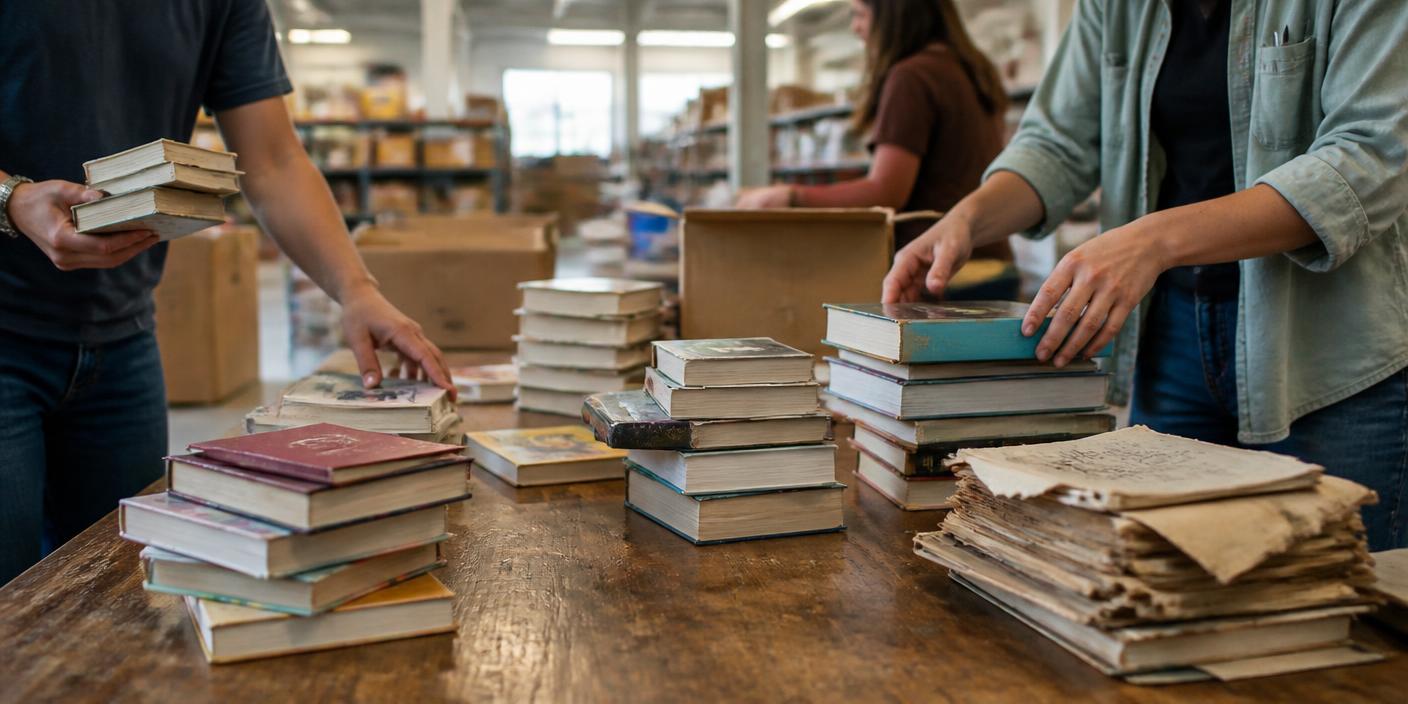
Which books nobody wants — and why
This is the part people find hardest to hear, so here it is plainly: some books have reached the end of their life, and trying to donate them just moves the disposal cost onto a volunteer. Knowing what falls into that category before you start saves everyone the trip.
The disqualifier is almost never age or subject — it's damage and demand. A 1940s novel in clean condition finds a reader. A 2019 hardcover that spent a winter in a damp basement does not, because mold spreads to everything stored beside it and no sorter will risk a whole pallet.
- Mold, mildew or a musty smell
- Automatic refusal everywhere, ours included. It contaminates neighboring books. Recycle these.
- Water damage, warped pages, missing covers
- Unsellable and unrehomeable. Paper recycling is the right destination.
- Encyclopedia sets and Reader's Digest condensed volumes
- Produced in enormous numbers, wanted by essentially nobody, and most dealers decline them. Some of our Pick-Up Partners will still take a set — mention it when you book and we'll tell you straight.
- Textbooks more than an edition or two behind
- Course adoptions move on. Current-edition textbooks are genuinely valuable; three-editions-old ones are not.
- Magazines, newspapers, catalogs
- Not accepted by us and rarely by anyone else. Curbside recycling.
- Anything with cigarette smoke or pet odor in it
- The smell doesn't come out and it transfers. Sad but true, and better learned now.
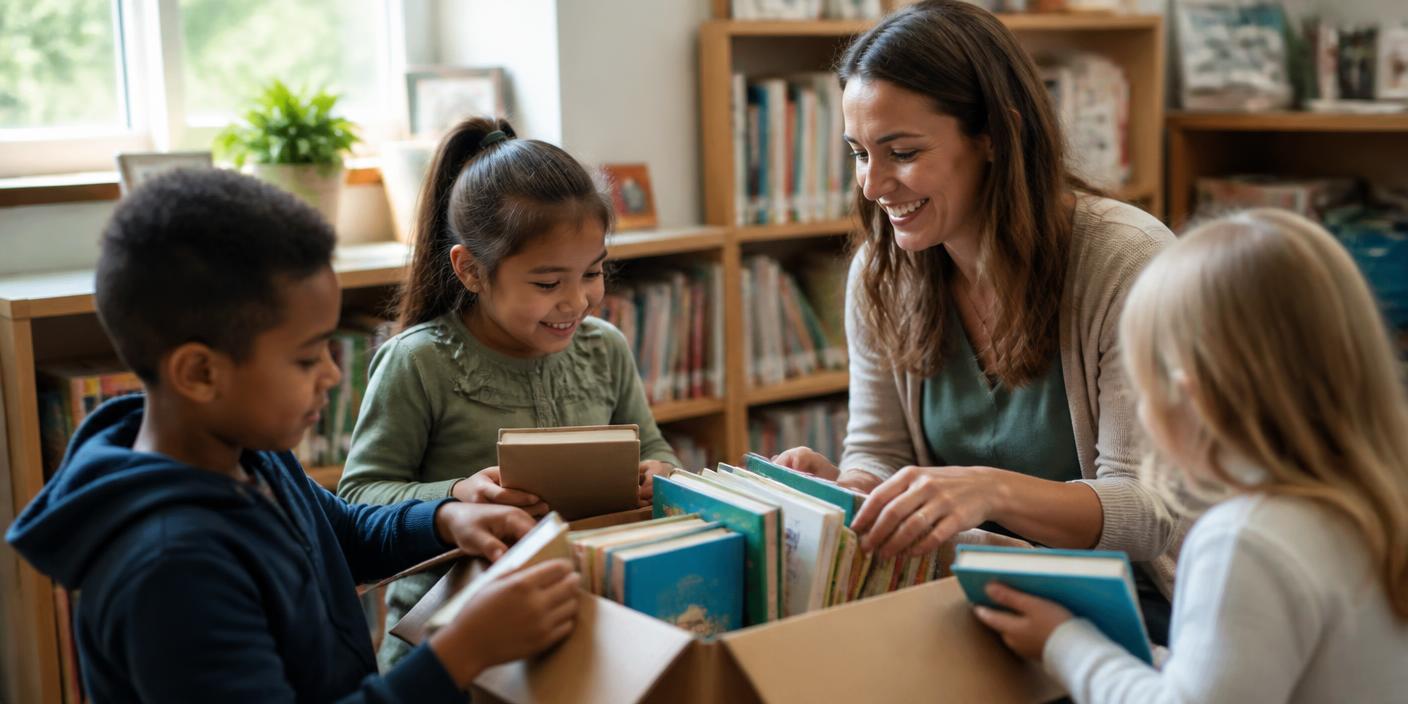
Where books can end up after you hand them over
Most donation pages go quiet at exactly this point, and it's the question thoughtful donors care most about. Here's the honest version, without the soft edges.
Only a minority of donated books have real resale value. That's normal, not a failure — it's true of every book drive, thrift shop and library sale in the country. The portion that does sell is what pays for the truck, the fuel and the partner's time, which is why the pickup costs you nothing.
Everything else still has reading life in it and has to find a home. Each Pick-Up Partner is an independent, usually family-run local business partnering with the Network, and they have full discretion over where the books they collect are re-homed. What's realistic depends on the mix of books in a given load and which outlets exist in that partner's area, so the list below is the kinds of places books find their way to, not a fixed itinerary.
Nobody can tell you in advance exactly where a specific box ends up — we won't pretend otherwise. What is certain is that the partner has to find every book a home, and books too damaged for any of it are recycled rather than landfilled.
One consequence worth being upfront about: because partners are independent local businesses rather than registered charities, a pickup is a free removal-and-rehoming service, not a tax-deductible contribution. If a deduction is your main goal, a qualifying nonprofit that issues receipts is the better route, and we'd tell you the same on the phone.
- Low-cost community book sales
- Many partners run inexpensive sales that put books back in readers' hands for a dollar or two rather than sending them to a warehouse.
- Used bookstores and resale
- The smaller, sellable share — collectible, current or in-demand titles — which is the income that keeps the pickup free for you.
- Schools and classroom teachers
- Classroom libraries, reading programs and teachers building shelves out of pocket are among the most common local outlets.
- Libraries, Friends groups and Little Free Libraries
- Branch sales, Friends-of-the-library inventory, and neighborhood Little Free Library stewards restocking their boxes.
- Shelters, nonprofits and literacy programs
- Shelters, prison and hospital reading programs, and literacy nonprofits that can take books in volume.
- Requests through our Give ME Books program
- Organizations submit a request through the Network and partners in that area can fill it directly, at no cost to the recipient, when the books they have on hand match.
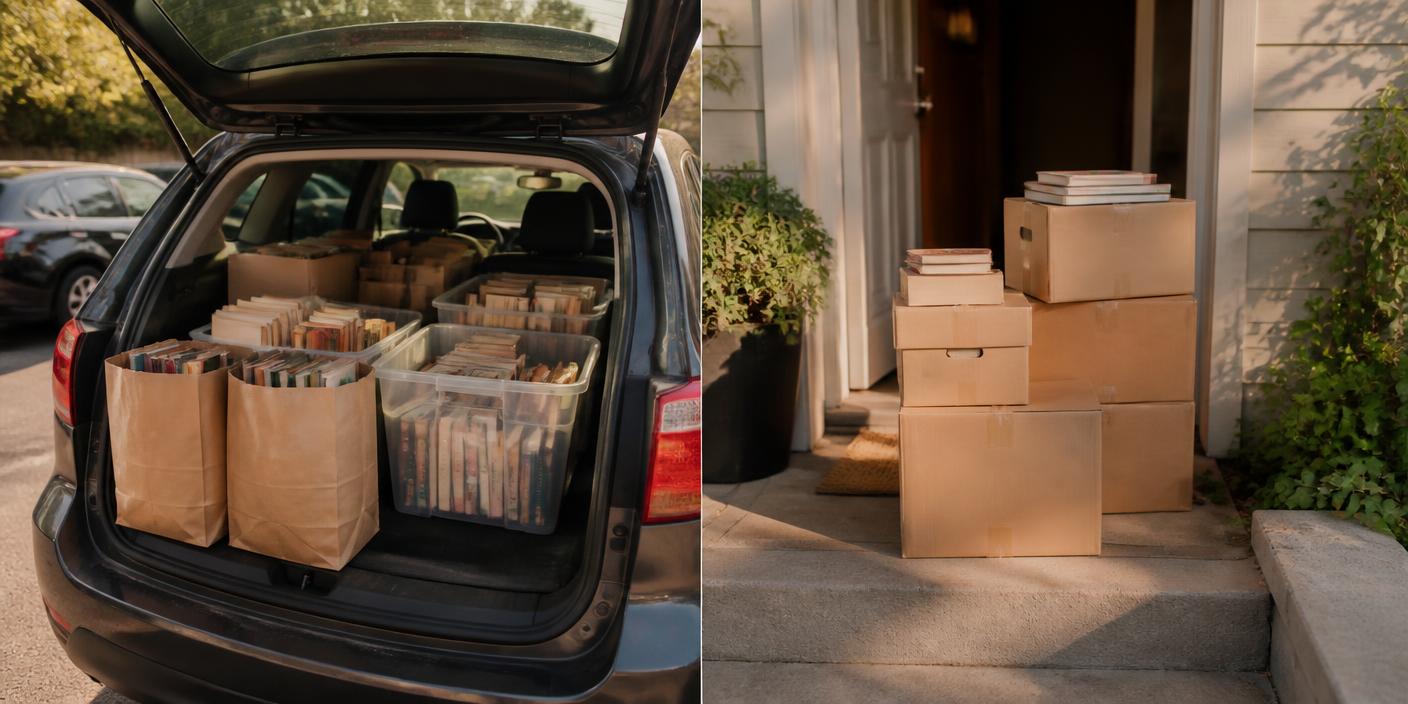
Pickup or drop-off: a straight decision rule
If you want one line to decide by: under three boxes, drop off; three or more, book a pickup. Everything else is detail.
- Book a pickup when
- You have three or more boxes, you're clearing an estate or a move, lifting and driving aren't practical, or you simply want one scheduled day and no further errands.
- Drop off when
- You have a single bag, you're already passing a library or thrift store, you want one specific school or shelter to receive them, or no Pick-Up Partner covers your ZIP code yet.
- Recycle when
- The books are moldy, wet, smoke-damaged, or otherwise past the point where a reader would take them for free.
Why you can check us out before you book
You should be skeptical of any website telling you it's the best option, so here's something you can verify yourself rather than take on faith. Little Free Library — the nonprofit behind the book-sharing boxes in neighborhoods across the country — lists our Give ME Books program in its own directory of places that supply free books to people who need them.
See the Little Free Library listingWe'd rather point at an outside organization's own page than quote ourselves. And to be equally plain about the limits: our Pick-Up Partners are independent local businesses, not registered charities, so a pickup is a free removal and rehoming service and not a tax-deductible donation.
Where to donate books in major cities
Each of these has its own guide with local pickup days, nearby drop-off options and the partners who cover the area. We serve far more places than are listed here — the booking form below is the fastest way to find out about yours.
Book donation questions, answered straight
Where can I donate books near me for free?
In areas the Give My Books Network covers, a local Pick-Up Partner collects books from your doorstep at no cost — no driving, no lifting, no drop-off limits. Outside those areas the reliable free options are your public library's Friends group, thrift stores such as Goodwill or the Salvation Army, schools, shelters, and Little Free Library boxes. Enter your ZIP code on this page and you'll know in a few seconds which applies to you.
Does anyone pick up book donations from your house?
Yes. Give My Books Network is a nationwide network of local Pick-Up Partners who collect book and media donations from your door on a day you schedule. This is the main practical difference between us and the alternatives: most national thrift chains have discontinued free book pickup because the resale value per pound doesn't cover a truck, and public libraries almost never collect at all.
How many books can I donate at once?
There's no upper limit with a scheduled pickup — partners routinely handle estate clearouts, downsizing moves and whole personal libraries. Libraries and thrift stores usually cap donations at a few boxes per visit because of storage space, which is why large donations turn into multiple trips if you go that route.
What kinds of books and media are accepted?
Fiction, non-fiction, children's books, textbooks, cookbooks, hardcovers and paperbacks are all accepted, along with CDs, DVDs, audiobooks and vinyl. We can't take magazines, newspapers, or anything moldy, water-damaged or missing its cover — those can't be resold or rehomed and should be recycled. Encyclopedia sets are accepted only when the local Pick-Up Partner takes them, so mention them when you book.
Is donating books tax deductible?
Not through a Give My Books Network pickup. Our Pick-Up Partners are independent local businesses rather than registered charities, so treat a pickup as a free removal and rehoming service. If a deduction matters to you, donate to a qualifying tax-exempt organization that issues a receipt and confirm the details with a tax professional — deductibility depends on the recipient's status and your own circumstances.
What happens to the books after they're picked up?
Only a minority of the books collected have resale value, and that share is resold — it's what makes the pickup free to you. Everything else has to be re-homed, and because each Pick-Up Partner is an independent local business, they decide where: commonly low-cost community book sales, used bookstores, schools and classroom teachers, libraries and Little Free Libraries, shelters and literacy nonprofits, or requests that come in through our Give ME Books program. Which of those a given box reaches depends on the books themselves and what outlets exist locally; anything too damaged for any of it is recycled rather than sent to landfill.
Where can I donate books that nobody seems to want?
If the books are clean and intact but unfashionable — older fiction, dated non-fiction, mass-market paperbacks — a pickup is usually your best option, because we take the whole lot rather than cherry-picking the resellable titles. If they're moldy, wet or smoke-damaged, the honest answer is paper recycling; asking a volunteer to sort through damaged books just moves the disposal work onto them.
Can I donate textbooks?
Yes, textbooks are accepted on a pickup. Be aware that current-edition textbooks hold real value while editions two or three cycles old have almost none, so a library or thrift store may decline them even when we won't.
Do I need to box or sort the books first?
Boxes or sturdy bags help, but no sorting is needed — partners sort everything themselves. Keep boxes light enough for one person to lift and leave them somewhere accessible on your pickup day; that's the whole preparation.
What if you don't cover my ZIP code?
Submit a request anyway. It's routed to partners near you and held for the area, and new coverage opens regularly as partners join — several ZIP codes go live every month. In the meantime the comparison table on this page shows which drop-off option best fits your quantity and book condition.
Is there any cost, catch or upsell?
No. The pickup is free, there's nothing to sign, and no payment details are ever requested for a donation pickup. Partners earn from reselling a portion of what they collect, which is what funds the service.
Where should I donate books in a city you don't serve?
Start with the Friends of the Library group for your local branch — they're in nearly every US county and they know which nearby organizations take overflow. From there, a used bookstore that buys lots will clear volume quickly, and a local Little Free Library steward will happily take a handful of good titles.
Schedule your free book pickup
Enter your ZIP code, pick a date, and a local Pick-Up Partner comes to your door. It takes about a minute and costs nothing.
Requests placed before 7:00 PM local time can be scheduled for the next day.
Pickup Request Form
Enter your ZIP code to begin your pickup request